

Day 1 | 19 January 2026
Day one of the UPTAKERS Training of Trainers – Phase 1 at UPC laid a solid foundation in Virtual Reality through a combination of theoretical input and hands-on practice.
Theory Class 1 – Introduction to Virtual Reality
The day opened with a lecture by Prof. Marta Fairén, introducing the core concepts of Virtual Reality. The session explored different types of immersion, VR models, and a wide range of applications across disciplines such as architecture, education, heritage, and research. The lecture emphasized how immersive technologies can enhance learning, engagement, and knowledge transfer.
Theory Class 2 – VR Systems and Technologies
In the second theoretical session, Prof. Fairén provided an in-depth overview of VR system architecture, focusing on user motivation, system outputs, and interaction design. Participants were introduced to output devices such as head-mounted displays, immersive screens, and projection-based systems, as well as input devices including sensors, tracking systems, haptic interfaces, and standalone VR solutions. The session included interactive discussions, allowing participants to reflect on practical use cases and technical challenges.
Lab Work – Practical VR Setup
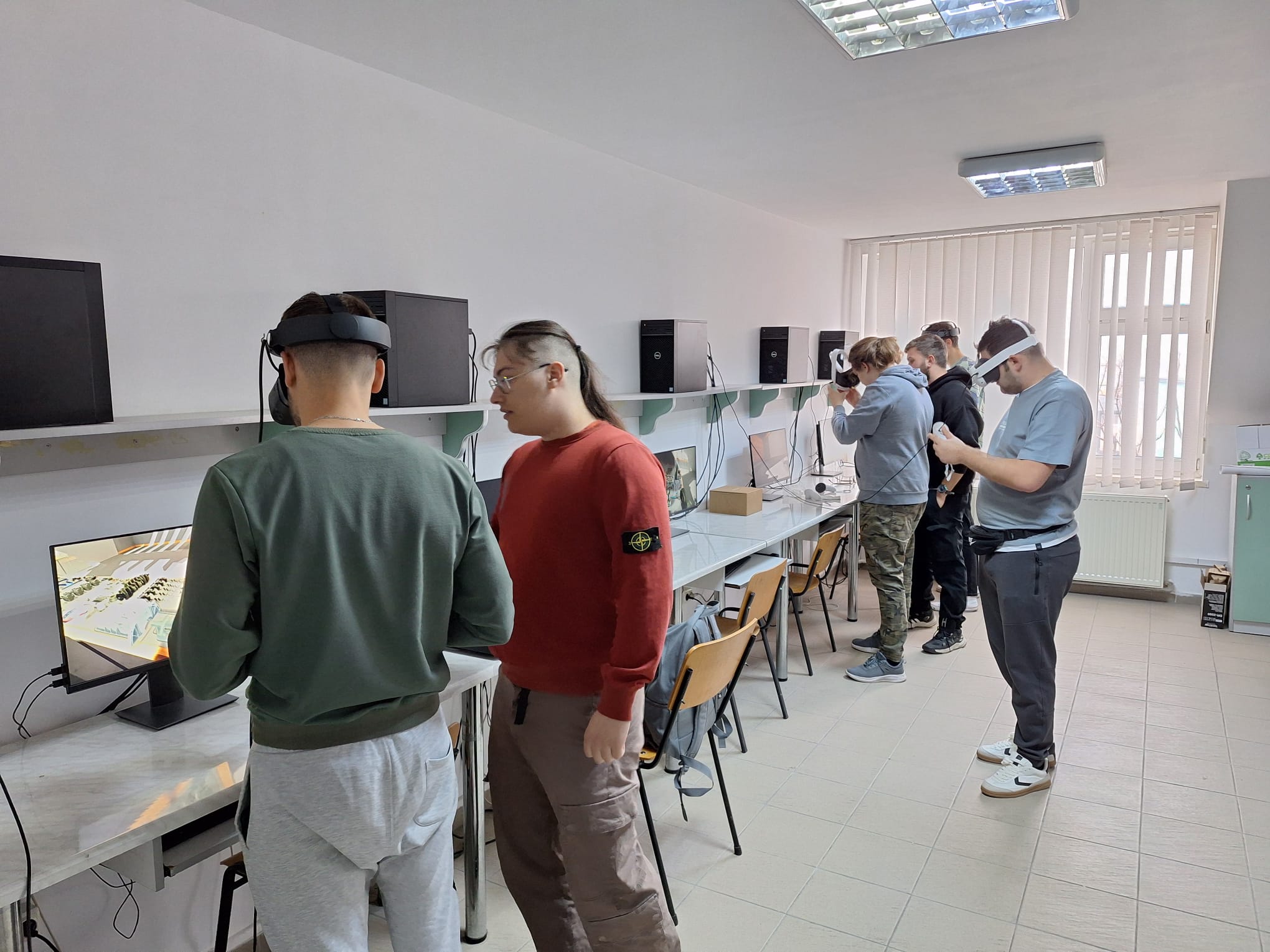
The afternoon was dedicated to hands-on lab work in the Aula Infinita lab. Jordi Moyés presented the technical specifications, setup, and configuration of the Meta Quest 3, followed by a practical workshop led by Eva and Alex on configuring VR environments using Unity. Participants gained direct experience in setting up immersive scenes, reinforcing the theoretical concepts introduced earlier in the day.
This first day successfully combined theory and practice, equipping participants with essential knowledge and skills to engage with VR technologies within the UPTAKERS framework.
Day 2 | 20 January 2026
The second day of the UPTAKERS Training of Trainers at UPC focused on advanced concepts of interaction and navigation in Virtual Reality, combining theoretical depth with intensive hands-on practice.
Theory Class 3 – 3D User Interfaces
The morning sessions were led by Prof. Carlos Andújar and Prof. Nuria Pelechano, under the title “3D User Interfaces.” The lectures introduced the fundamentals of 3D interaction and 3D user interface design, addressing key concepts such as usability, affordances, constraints, and the main components of user interfaces in immersive environments.
The session then explored selection and manipulation techniques, highlighting the limitations of input devices, degrees of freedom (DoF), classification of interaction techniques, object physics, and key manipulation variables. This was followed by an in-depth discussion on navigation in VR, covering travel tasks (exploration, search, and maneuvering), active and passive travel techniques, and alternative navigation systems such as walking-in-place devices.
Lab Work – Interaction and Navigation in Unity
In the afternoon, participants engaged in practical lab work with Jordi Moyés and Eva, applying the theoretical concepts using Unity. The session covered VR environment setup, scene creation, object placement, and navigation design. Participants practiced projecting scenes to VR headsets via cable, loading projects directly onto the headset, configuring interaction rigs for collision detection, and enhancing environments through scripting and material assignment.
Day two strengthened participants’ understanding of immersive interaction and navigation, bridging theory and practice to support the development of effective and user-centered VR experiences within the UPTAKERS project.
Day 3 | 21 January 2026
The third day of the UPTAKERS Training of Trainers at UPC deepened participants’ understanding of user experience and human factors in Virtual Reality, with a strong focus on navigation strategies and immersive interaction design.
Theory Class 4 – Navigation, Controls, and Human Factors in VR
The morning session was delivered by Prof. Nuria Pelechano, addressing advanced approaches to navigation in VR, including walking-in-place systems, thought-based navigation, and emerging interaction paradigms. Particular attention was given to motion sickness, its causes in immersive environments, and practical strategies to reduce and control it through design and system configuration.
The lecture also introduced VR control systems and the key human factors influencing immersive experiences, covering both perceptual and cognitive considerations. Prof. Pelechano discussed the hierarchy of system control methods, ranging from graphical menus (such as adapted 2D menus, 3D widgets, and fingertip menus) to voice commands, gesture-based interaction, and the use of physical or virtual tools.
Lab Work – Navigation and Interaction in Unity
In the afternoon, Eva and Alex led hands-on lab sessions using Unity, where participants practiced moving and rotating objects, implementing teleportation, and navigating immersive environments through VR headsets. Exercises were carried out within a city-scale model, allowing trainees to experiment with different navigation techniques and interaction scenarios.
The day concluded with open discussions on the VR models to be developed and delivered through the upcoming UPTAKERS courses, aligning technical capabilities with pedagogical objectives and reinforcing the practical outcomes of the training.
Day 4 | 22 January 2026
Day 4 of the UPTAKERS Training of Trainers at UPC focused on Augmented Reality (AR) and Mixed Reality (MR), expanding participants’ understanding of immersive technologies beyond virtual environments.
During the theoretical session, Prof. Marta Fairén introduced the fundamentals of AR and MR, covering AR display types, interaction methods, tracking technologies, and current research directions. The session highlighted the key differences between VR, AR, and MR in terms of scene generation, display devices, and sensing systems, and explored Milgram’s Reality–Virtuality Continuum, including aspects such as extent of world knowledge, extent of presence, and reproduction fidelity. Participants also discussed display, interaction, and tracking technologies, and clarified the conceptual and technical distinctions between AR and MR.
In the afternoon, hands-on lab work with Jordi translated theory into practice through Unity-based AR development. Participants set up AR environments, built interactive scenes, implemented grab and distance interactions, and experimented with QR-code tracking, gaining practical skills essential for the integration of AR/MR into UPTAKERS courses and training modules.
Day 5 | 23 January 2026
The fifth and final day of the UPTAKERS Training of Trainers at UPC was fully dedicated to advanced hands-on lab work and the consolidation of learning outcomes.
During the lab session, led by Jordi and Alex, participants worked on a Mixed Reality project using Unity. Activities included setting up MR environments, scanning physical rooms using the Meta Quest headset, defining spatial boundaries, identifying spawn positions, and capturing screenshots and videos directly from within the immersive space. This practical exercise allowed participants to experience the full workflow of developing and documenting MR applications.
The day concluded with final reflection and discussion sessions focused on how the acquired theoretical knowledge and technical skills can be effectively transferred into UPTAKERS courses and workshops. These discussions emphasized pedagogical integration, scalability, and the role of immersive technologies in enhancing learning experiences across partner institutions.
hashtag#UPTAKERS hashtag#ErasmusPlus hashtag#CBHE hashtag#CapacityBuilding hashtag#TrainingOfTrainers hashtag#DigitalInnovation hashtag#VirtualReality hashtag#XRinEducation hashtag#DigitalHeritage hashtag#ImmersiveLearning